
Why climate sensing matters for livestock welfare and facility performance
Effective climate control in livestock housing relies on continuous sensing of temperature, humidity, air pressure and gas concentrations. These sensors feed a controller that runs fans, inlets, and heating/cooling to keep animals healthy and productive. In this article, we explain why each sensor is needed, what good specifications look like, and how to install and maintain sensors on the farm.
Why Environmental Sensing Matters
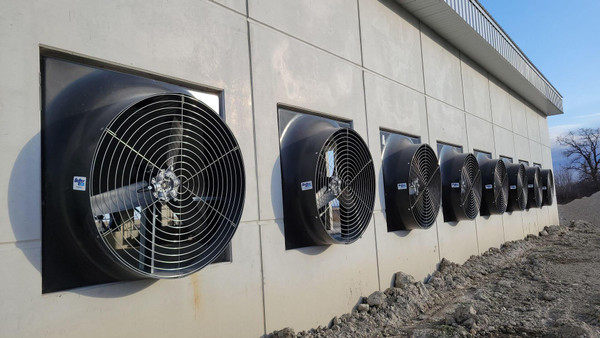
In any confined animal building, ventilation must serve two goals at once: remove moisture and harmful gases, and control temperature. Purdue Extension notes that barn ventilation should remove moisture (and odors) in cold weather and provide cooling in hot weather. If moisture or ammonia build-up, animals suffer. For example, poultry experts recommend keeping barn relative humidity around 50–70% through ventilation; higher RH leads to wet litter and high ammonia, while too low RH increases dust and heat loss. Similarly, welfare guidelines often cite ammonia targets around 20–25 ppm; above those levels respiratory health declines. Carbon dioxide is another clue: it rises when fresh air is inadequate. In practice, farmers use sensors so that when CO₂ or NH₃ rise, or RH crosses thresholds, the controller automatically increases ventilation or heat. In summary, monitoring barn climate variables ensures optimal welfare and productivity. Proper sensing helps avoid heat stress on hot days and prevents excessive moisture/odors on cold days.
Key Barn Climate Sensors
Modern systems typically include these core sensors:
- Temperature: Measures barn air temperature. It directly controls heaters and fans. Maintaining animals near their “thermoneutral” range is vital for growth; even a few degrees off can affect weight gain. Temperature alone isn’t enough, but it is the base signal for most controls.
- Humidity (RH): Measures moisture in the air. High RH means the air is saturated with water (from animal breath and evaporation). In winter, fresh cold air holds little moisture; as it warms in the barn, it picks up water that must be removed. A humidity sensor helps run “minimum ventilation” whenever RH rises. For example, keeping RH ~55% versus 75% makes a big difference in litter dryness. Extension studies note that RH consistently between 50–70% (using ventilation to control it) keeps litter drier and footpad lesions lower.
- Carbon Dioxide (CO₂): Indicates ventilation adequacy. CO₂ comes from animal respiration (and heaters). Since it’s only removed by fresh air, high CO₂ means air is stale. Industry sources suggest keeping CO₂ well below 3000 ppm in livestock houses. Farms use CO₂ levels as a guide to open inlets or add fans. (Note: CO₂ is usually correlated with ammonia and humidity in well-mixed barns.)
- Ammonia (NH₃): A pungent gas from manure. NH₃ is harmful to respiratory health and is often regulated. Many guidelines aim for <20–25 ppm indoors. Continuous NH₃ sensors allow systems to dial up ventilation or manure removal when needed.
- Static/Sub-Pressure: Measures the pressure difference (usually negative) between inside and outside. In a sealed house with fans exhausting, sub-pressure keeps air entering via inlets instead of leaks. A static pressure sensor helps the controller position inlets correctly: too little pressure means leaks or too-large openings; too much means inlets are undersized and fans stall.
- Other: Light intensity (for photoperiod control) or external weather sensors (wind speed/direction, rain) are sometimes used. For example, a light sensor ensures house lights match the programmed levels. However, humidity, CO₂, and NH₃ are most critical for air quality.
Interpreting Sensor Specifications
Sensor datasheets list key parameters include:
- Range & Accuracy: The datasheet for our example humidity sensor specifies a range of 0–100% RH. It claims accuracy of ±2% RH in the mid-range (40–85% RH) and ±3% RH at extremes. This means in typical conditions it’s quite precise. When comparing sensors, check both the best-range accuracy and the low/high range accuracy.
- Response Time (T63): An example lists a time constant T63 of 20 seconds (at 0.5 m/s airflow). That means the sensor needs ~20s to register ~63% of a sudden step change. Faster response is better for rapidly changing conditions (like a fan switch), but very slow sensors lag behind the real situation. Always verify what flow condition the datasheet used for T63.
- Ingress Protection: Our example is rated IP67 (dust-tight, can survive temporary water immersion). That’s good, but note: IP67 doesn’t imply it can handle high-pressure jets or hot water. The manufacturer actually recommends using a protective cap for washdowns and specifies only cold-water cleaning. When evaluating IP ratings, also check the installation manual for practical guidance.
- Output Type: The example comes in multiple signal versions (0–10V, 4–20mA, etc.). In general, 4–20mA current loops are favored for long cable runs (immune to voltage drop), while 0–10V is simpler for short cables. Make sure the sensor output matches your controller’s input. The example claims it can drive several hundred meters of cable, indicating robust design.
- Diagnostic Features: Look for self-test or status indicators. The example sensor has a bi-color LED: solid green for OK, flashing green for range warning, red for error. This is very helpful in the barn: a quick glance reveals sensor status. Many plain sensors have no indicators, which means more downtime troubleshooting.
- Filter/Protection: Some humidity sensors (like ours) have a Teflon/porous filter to keep dust and moisture off the sensitive element. This protects against clogging by dust or condensation. If a datasheet mentions a protective dust cap or filter, that’s a plus for barn use.
In summary: Always compare the technical table carefully. Use accuracy and range to ensure it meets your control needs. Check response time to see if it can follow your ventilation cycles. Verify the environment specs (IP rating, temperature/humidity limits) match your barn. And don’t forget practical notes in the manual (e.g. cleaning rules, placement guidance). In our example, the provided files gave these values, which we translate into the above guidance without naming the product.
Placement and Maintenance Best Practices
Even the best sensor can give bad data if misused. Follow these farm-tested practices:
- Proper Mounting: Install sensors in representative locations. Hang humidity and CO₂ probes around animal height, away from drafty inlets or ceiling hotspots. The example datasheet explicitly warns to avoid direct sunlight and ensure free air flow around the sensor. In plain terms: don’t tuck the sensor under a lamp or right next to a fan; give it open space so it reads the room, not the wall.
- Wiring: Use shielded cable if possible in a dusty barn. Power the sensor with stable DC voltage (e.g. 12–24V) as specified. Our example requires ~24VDC. Observe polarity and waterproof any junctions. The datasheet follows standard wiring guidelines (referencing IEC/EN electrical standards).
- Cleaning: Protect sensors during routine washdown. The example sensor’s manual strongly advises putting on the protective cap and even plugging the connector during cleaning. We interpret that as: never spray the exposed sensor head with high-pressure streams. Only use mild cleaning (brush or low-pressure hose) with the cap in place. Afterward, allow the barn to ventilate well before trusting the reading (if the sensor got wet, readings can be off until it dries).
- Calibration Checks: While many digital sensors maintain calibration, it’s wise to spot-check them. For example, some ammonia sensors advertise “no recalibration needed,” but users often still test with a reference gas each season. We recommend verifying critical sensors at least yearly (for humidity, a simple salt bath or comparing two sensors can work). Keep records of any drift.
- Avoid Interference: Don’t mount sensors on metal conduit that runs alongside high-voltage wiring, to avoid electromagnetic noise. Also ensure the sensor cable length is within the spec (ours allows 100–200 m). If in doubt, consult the manual.
- Regular Inspection: Check that protective filters and caps are clean. For example, a clogged dust screen will slow response (a note in the maintenance guide warns that a blocked filter slows the sensor). Replace any gaskets or plugs that wear out.
Following these steps keeps the readouts reliable. In short: install in open air at animal level, clean carefully, and verify periodically. These recommendations come from industry best practices and the example datasheets.
Quick Comparison: Key Sensor Attributes
When shopping for sensors, use this checklist of attributes. We include one column of values from the provided humidity sensor as an example.
|
Attribute |
What to look for |
Example Sensor (from spec) |
Other Sensors (to compare) |
|
Accuracy |
±% over operating RH range (lower ± is better) |
±2% (40–85% RH); ±3% (10–95%) |
e.g. ±1% or ±3% across a similar range |
|
Response Time |
Time constant T63 (at given flow): shorter is faster |
20 s (at 0.5 m/s airflow) |
e.g. 5–30 s depending on design |
|
IP Rating |
Dust/water protection (IP65, 67, etc.) |
IP67 (dust-tight, waterproof) |
e.g. IP65 or IP67; note real cleaning limits |
|
Output Signal |
Voltage (0–10V/0–5V) or Current (4–20 mA); match your system |
0–10 V (also available 4–20 mA) |
Ensure compatibility (0–10V vs 4–20mA, etc.) |
|
Diagnostics |
Built-in LEDs or error outputs |
Yes – status LED (OK/Error) |
Many have none; more features = easier upkeep |
|
Filter/Cap |
Included dust/humidity filter or cleaning cap |
PTFE dust filter + protective cap |
Check if sold separately or built-in |
|
Mounting |
Installation notes (free air, avoid sun, etc.) |
Free-hanging, avoid sunlight |
Any special restraints? (e.g. must be outdoors only) |
Table: Sensor selection attributes. The “Example Sensor” column shows values from the provided spec sheets (cited). The “Other” column is for you to compare different models.
Use this table to compare candidates. The example values above illustrate a high-quality humidity sensor (good accuracy, IP67, etc.). When writing your blog, explain each attribute in words and point readers to such a checklist for easy comparison.
Conclusion and Publishing Checklist
Accurate sensors are the backbone of automatic climate control in livestock facilities. Using all of the above: temperature, humidity, CO₂, ammonia, and pressure sensors together, allows ventilation systems to respond to the actual barn conditions. In practice, this means healthier animals, drier bedding, and fewer spikes of harmful gases. We based our guidance on extension research and technical datasheets not on brand hype.